FOOT AND ANKLE SURGERY
Dr Bond has a special interest in foot and ankle surgery.
He treats a wide range of foot and ankle conditions. Below is a summary of common conditions and the most frequent surgical procedures:
Ankle Sprains
- Ankle lateral ligament injuries are generally managed conservatively. However, if persistent pain and instability remain after prolonged rehabilitation, lateral ligament reconstruction may be considered. Early and late ligament surgeries tend to have similar outcomes.
- Broström procedure with internal bracing
- Day procedure
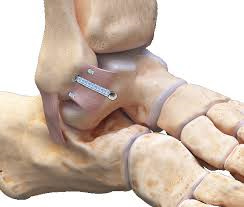
Foot and Ankle Arthritis
- Multiple joints, from the ankle to the midfoot, can develop arthritis.
- For the ankle, either a replacement or a fusion can be performed. Each has its own advantages and disadvantages.
- Arthritic joints in the midfoot and lesser parts of the foot are generally fused.
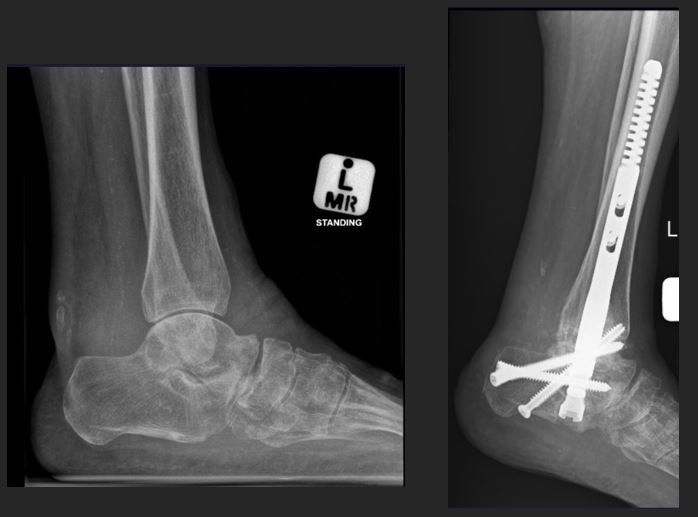
Severe foot deformity with Arthritis
Osteochondral Defects of the Talus
- Arthroscopic microfracture or OATS (osteochondral autograft transfer system) procedure
Achilles Tendinopathy
- There are two types of Achilles tendinitis: insertional and mid-substance. 1. Insertional tendinitis generally requires surgery. 2. Mid-substance tendinitis is often managed with heel raises and physiotherapy
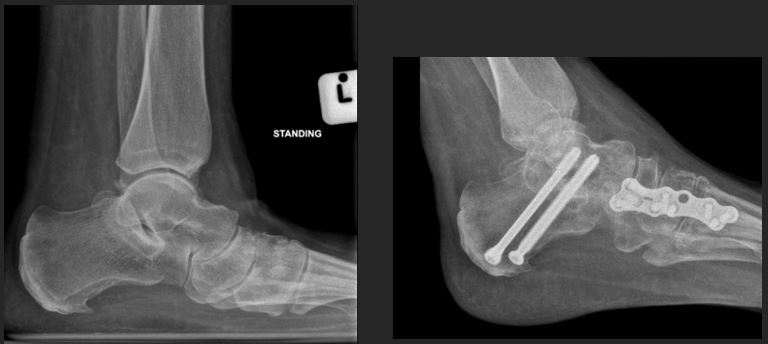
Flat Feet, Posterior Tibial Tendon Dysfunction, and Cavus Feet
- A full range of conservative and surgical options is available.
- Conservative treatment includes custom shoe inserts
- Surgical treatment ranges from tendon transfers and osteotomies (for minor deformities) to triple fusions of the hindfoot and midfoot (for more severe deformities)
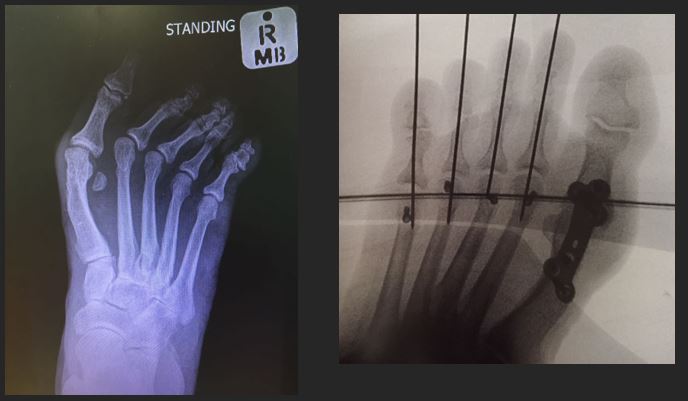
Bunions
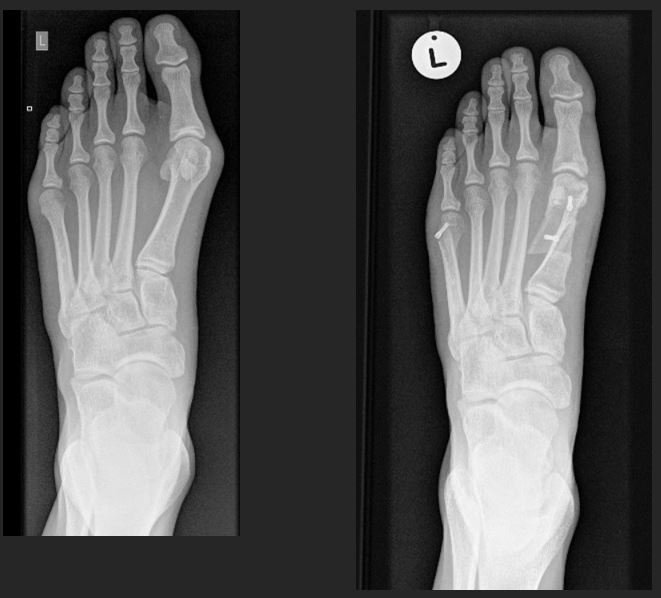
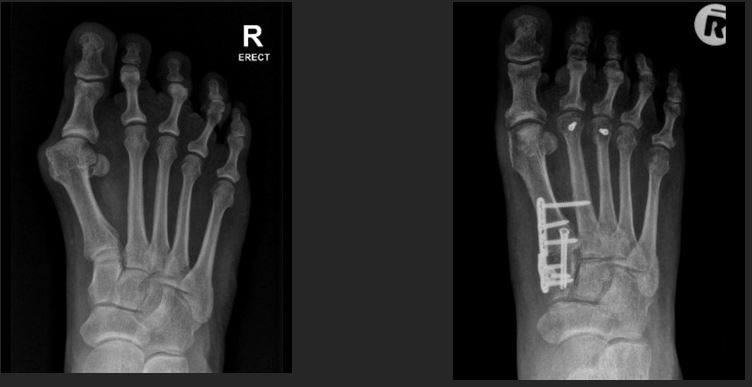
- Painful bunion deformities can be effectively treated with the BOAT procedure (Best Of All Techniques), which includes: First metatarsal osteotomy, Akin osteotomy of the proximal phalanx and Lateral soft tissue release
Lesser Toe Deformities
- Painful clawed and hammer toes are typically corrected using: Proximal interphalangeal fusions, Weil osteotomies and Soft tissue balancing